
Fixed sensors or mobile robots: the two bets on corrosion under insulation
Two very different technologies are being backed to solve the same problem in 2026: hardware that lives permanently on the pipe, and robots that visit it. They're not actually competing for the same job.
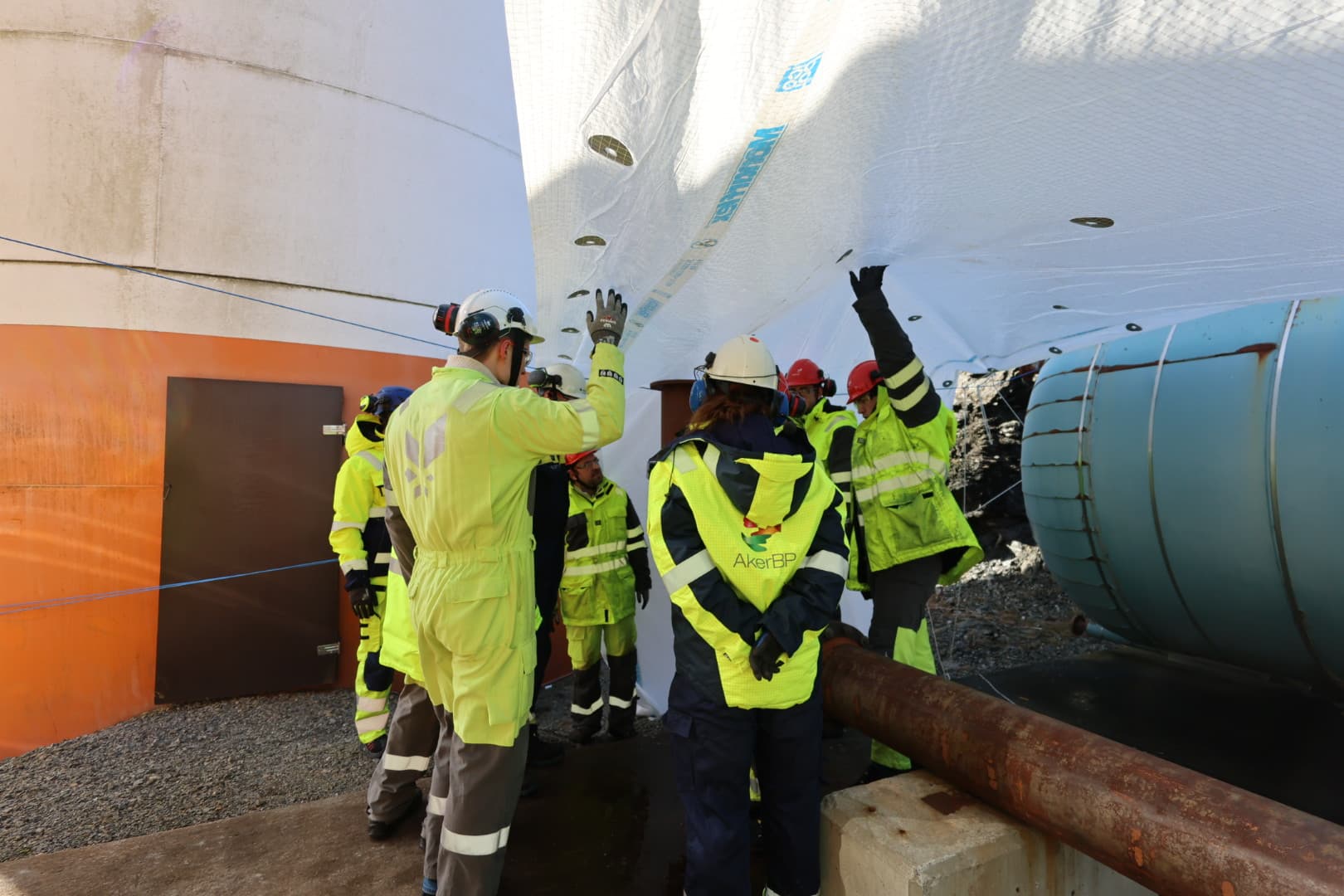
In April, DNV qualified Subtera's Pi360, a handheld terahertz sensor that reads corrosion and moisture through insulation cladding without removing it. A few weeks later, CorrosionRADAR announced a partnership to expand its permanently wired CUI monitoring network into a new market. Wireless retrofit systems built to turn entire pipe runs into always-on sensing networks are being pitched as the new standard for critical assets. All of it points the same direction: real capital is going into fixed, installed hardware as the answer to corrosion under insulation.
We're building the other answer. A robot that climbs to the pipe, instead of hardware that waits on it. Both bets are legitimate, and worth being clear-eyed about, because they solve different halves of the same problem.
What fixed sensors are good at
A permanently installed sensor, wired or wireless, gives you something a periodic inspection never can: a continuous timeline at that exact point on the pipe. No mobilisation, no scheduling, no waiting for the next campaign. If you already know where your worst corrosion risk sits, a fixed sensor watches it every hour of every day and flags a trend long before it becomes a failure.
The catch is in that first clause: you have to already know where to look. CUI doesn't announce itself at the point where water gets in. It travels beneath the insulation as temperatures and seasons shift, and shows up wherever the trapped moisture happens to pool, which requires deep industry experience to know how to locate. A network of fixed points only ever sees the points it was wired to.
What mobile robots are good at
A climbing robot doesn't need to know in advance where the corrosion is. It covers the pipe, all of it, 360° around the circumference, over bends and vertical runs and long horizontal stretches, without anyone needing to have guessed correctly beforehand. That's the piece we've built our robots around: full physical coverage of pipe networks that, in a typical process plant, can run into thousands of kilometres, most of it insulated and most of it never instrumented.
It also means no new hardware has to live on the asset permanently. For an operator with decades of brownfield piping and no sensor infrastructure already in place, that matters. A robot can start generating data on existing pipework this quarter. A sensor network requires deciding, upfront, exactly where the capital goes.
The trade-off is the one you'd expect: a robot walking a pipe network on a cadence, however frequent, is not the same as a wire that never sleeps.
Why this isn't really a competition
CUI has contributed to more than 20% of major oil and gas accidents in the EU over the past 35 years, and it stays dangerous specifically because it hides. Neither a handful of fixed points nor a single inspection pass fixes that on its own. The two approaches are better read as complementary layers of the same shift: from time-based, schedule-driven maintenance to maintenance that responds to actual asset condition.
Fixed sensors are the right tool for the handful of locations an operator already knows are high-consequence. Mobile robots are the right tool for finding out what's happening everywhere else, the majority of the network that was never going to get its own dedicated sensor. Used together, robots do the wide net across the asset and flag where a fixed point might be worth the investment; fixed sensors then hold that specific spot under continuous watch. The robotic NDT market as a whole is projected to roughly triple by the early 2030s, and fixed-sensor monitoring is scaling right alongside it. That's not two technologies fighting for the same budget line. It's a sign the whole category, moving inspection from a scheduled event to a continuous data stream, is the direction the industry has actually decided on.
For us, that means staying focused on the part only a mobile robot can do well: reaching every metre of a pipe network that was never going to be instrumented point by point, and turning that into the same kind of continuous, decision-ready data that fixed sensors already deliver at their one location. That's the gap we started Saro to close, and it's only getting more relevant as more of the industry agrees the old way of doing this, strip it, look, hope, re-insulate, has run its course.